Vista Unified School District
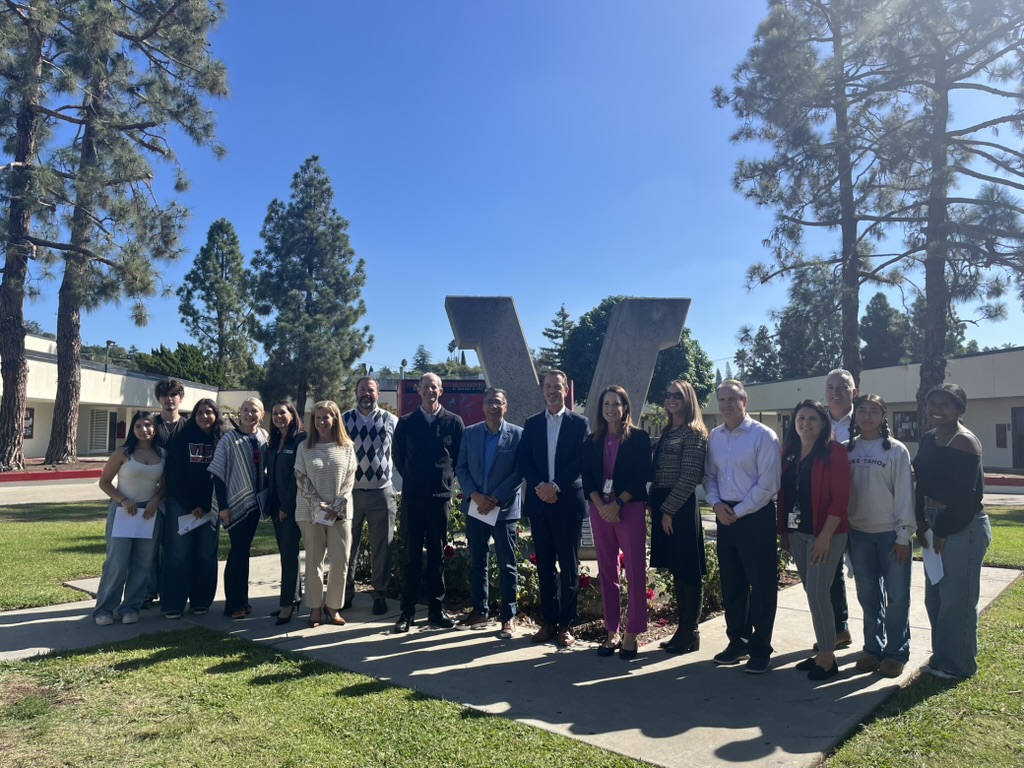
North County Superintendent Network at Vista High School, October 22, 2025
District Leadership
Matthew Doyle
Superintendent, Vista Unified School District
Megan Ratliff
Principal, Vista High School
District Purpose
"To inspire each and every student to persevere as critical thinking individuals who collaborate to solve real world problems."
Key Materials & Frameworks
Framework for the Future v 2.0
Strategic FrameworkVista Unified's comprehensive framework including vision, learner portrait, adult portrait, system portrait, core values, and theory of action.
Key Points:
- •Vision: Every student graduates as a resilient, agile learner and creative problem solver
- •Learner Portrait: Kind and Confident; Curious and Connected; Capable and Knowledgeable
- •Core Values: Respect, Trust, Collaboration, Equity, Kindness
Blueprint for Educational Excellence and Innovation
Implementation StrategyVista High School's operational blueprint for implementing learner-centered design principles.
Key Points:
- •Clear Identity grounded in district vision
- •Small Learning Communities with caring adults
- •Real-World Learning through authentic work
Vista High School Demographics & Programs
School ProfileOverview of Vista High School's student population and educational pathways.
Key Points:
- •1,634 Students (87% Hispanic, 8% White, 5% Other)
- •A-G for All with 6 CTE Pathways
- •AP, IB, JROTC, Character Leaders & Internships
XQ Super School Principles
Design PrinciplesVista High School's commitment to six core XQ principles driving school transformation.
Key Points:
- •Strong Mission & Culture
- •Meaningful, Engaged Learning
- •Caring & Trusting Relationships
- •Youth Voice & Choice
- •Smart Use of Space, Time & Tech
- •Community Partnerships (100+ developed)
Response to Data: Professional Learning Communities
Professional DevelopmentVista's PLC structure meeting 2-3 times per week to collaborate around the 4 questions and conduct monthly learning walks.
Key Points:
- •What do we want students to learn?
- •How will they best learn this material?
- •How will we know if they have learned it?
- •What happens when they do or don't learn it?
Flex Time: Meaningful, Engaged Learning
Student SupportVista's Tier 1 and Tier 2 support system embedded in daily flex time (60 mins) for academic intervention and skill development.
Key Points:
- •Tier 1: Impacter protocols, PBIS, My Plan graduation requirement, Xello platform, AVID
- •Tier 2: Test correction groups, writing lab, student-led Q&A, study groups, peer tutoring
Risk Rater: Future-Focused Development
Data & AnalyticsData-driven tool identifying vulnerable students using 23 research-based indicators to build caring relationships and assess active learning.
Key Points:
- •Predictive quotient based on 23 research indicators
- •Focuses on most vulnerable students
- •Enables targeted relationship building
Seven Consecutive Semesters of Growth
OutcomesMeasurable outcomes from Vista High School's learner-centered transformation.
Key Points:
- •8% increase in graduation rate
- •7 consecutive semesters of reduced D/F rate
- •50% reduction in suspension rate
- •20% reduction in chronic absenteeism
- •112% increase in college application rates
- •14% increase in AP test pass rate
Learner-Centered School Design
Vista High School's implementation of learner-centered design includes:
- Clear Identity:Focus of the school grounded in the district vision unique to the community
- Small Learning Communities:Learners belong to small groups led by caring adults
- Real-World Learning:Authentic work across disciplines and with community partners
- Performance Assessment:Evidence of whole-learner and academic outcomes through competency-based assessments
- Teacher Collaboration:Regular, structured time to learn together and co-design learning experiences
- Distributed Leadership:Structures supporting shared ownership and agency at all levels